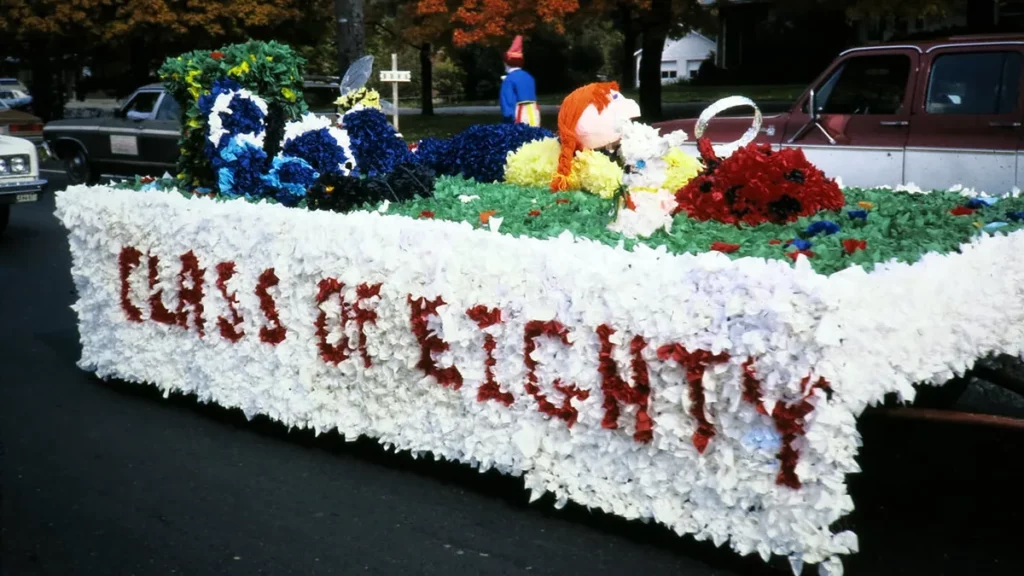
Plan in a minute The best homecoming float ideas are big, readable and cheap: school colors and mascot letters, a football field, under the sea or a giant storybook. Pick a theme a crew of six can finish in three weekends, confirm the parade rules first, and hand out candy from walkers, never the trailer.
Float season tends to start with an empty trailer and a theme announced two weeks late. This guide is for student councils, class officers, club leaders and parent volunteers working on their first homecoming parade float, in high school or college.
It sorts 24 homecoming float ideas by how much work they take, lays out a three-week schedule, and lists the parade rules worth checking before anyone buys chicken wire.
What makes a good homecoming float idea?
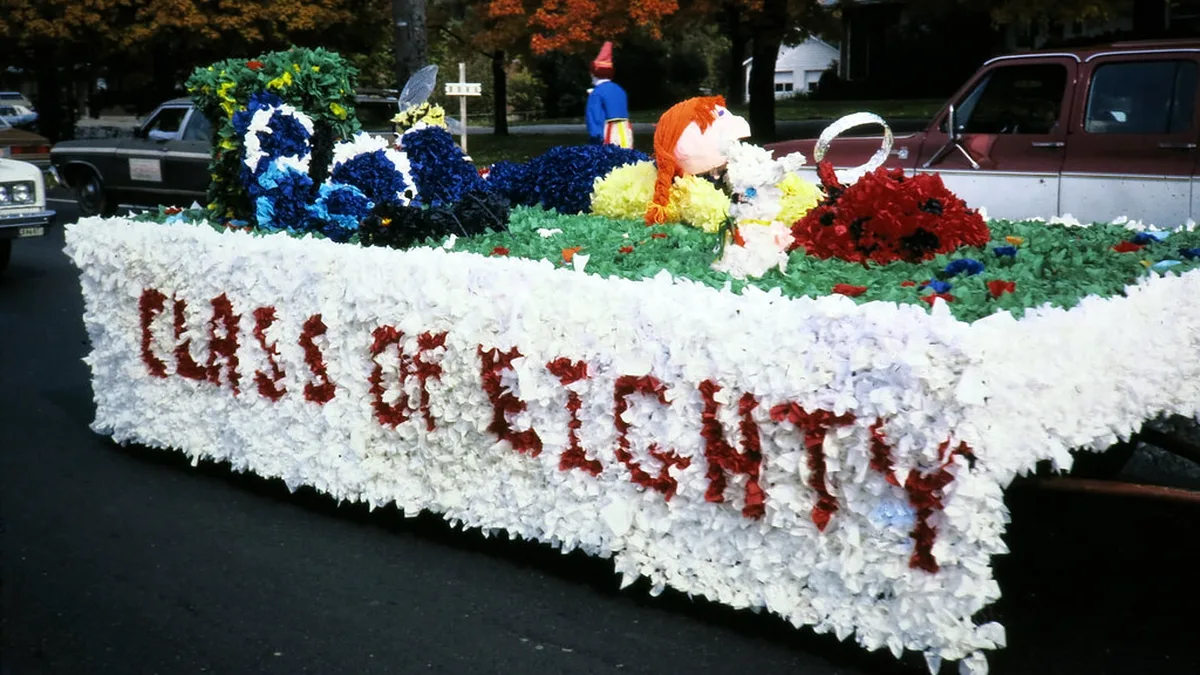
A good homecoming float idea reads from the curb in two seconds, fits the trailer you can actually borrow, and can be finished by the volunteers who really show up. Spectators see each float for less than a minute, so one big shape and one clear phrase beat ten small details nobody can make out.
Most first crews pick a theme that looks great in a sketch and then run out of hands. A student who leads a class float every year posted on Reddit that they were drawing a blank on a clever parade float theme. Pick by effort first and cleverness second.
Run every theme through four questions at the planning meeting:
- Curb test: can someone on the sidewalk name the theme from one side of the trailer?
- Crew test: can the number of people who came to the last meeting finish it?
- Trailer test: does it fit the deck you have, with room for anyone the rules allow on board?
- Theme test: does it connect to the school, the mascot or the homecoming theme in one sentence?
Northwestern Oklahoma State University warns in its Float Building 101 guide that a float needs more than words on the skirting and people standing on a trailer. One real object, even a simple one, beats a banner.
24 homecoming float ideas sorted by build effort
These 24 homecoming float ideas fall into three effort tiers: 8 that a crew of four to six can finish in one weekend, 10 that need two weekends and one built centerpiece, and 6 that need a larger crew, a sketch to scale and three weekends. A first-year council should pick from the first two tiers.
| # | Theme | Effort | Crew | Signature piece |
|---|---|---|---|---|
| 1 | School colors and mascot letters | One weekend | 4 to 6 | Giant pomp letters on both sides |
| 2 | Giant class jersey | One weekend | 4 to 6 | Painted plywood jersey with the class year |
| 3 | Football field | One weekend | 4 to 6 | Green skirt, cardboard goalposts |
| 4 | Scoreboard countdown | One weekend | 4 to 6 | Painted scoreboard with the rival name |
| 5 | Fall harvest | One weekend | 4 to 6 | Hay bales, paper leaves, pumpkins |
| 6 | Tailgate picnic | One weekend | 4 to 6 | Cardboard grill, picnic blanket, pennants |
| 7 | Throwback yearbook page | One weekend | 4 to 6 | Giant picture frame on the deck |
| 8 | Board game path | One weekend | 4 to 6 | Colored squares and two foam dice |
| 9 | Under the sea | Two weekends | 6 to 10 | Blue fringe waves, a cardboard whale |
| 10 | Outer space | Two weekends | 6 to 10 | Painted planets, a foil rocket |
| 11 | Jungle safari | Two weekends | 6 to 10 | Paper vines, a mascot in a safari jeep |
| 12 | Carnival midway | Two weekends | 6 to 10 | Striped tent top, a ticket booth |
| 13 | Decades diner | Two weekends | 6 to 10 | Checkered floor, a cardboard jukebox |
| 14 | Superhero city | Two weekends | 6 to 10 | Cardboard skyline with the mascot as hero |
| 15 | Video game level | Two weekends | 6 to 10 | Folded paper cubes in pixel shapes |
| 16 | Giant storybook | Two weekends | 6 to 10 | An open book made from two plywood sheets |
| 17 | Winter wonderland | Two weekends | 6 to 10 | White pomps, paper snowflakes |
| 18 | Class time machine | Two weekends | 6 to 10 | A clock face with each grade on the dial |
| 19 | Giant mascot head | Three weekends | 10 or more | Chicken wire head, pomp fur |
| 20 | Island volcano | Three weekends | 10 or more | Wire cone, paper lava |
| 21 | Haunted house | Three weekends | 10 or more | Plywood house front with glowing windows |
| 22 | Royal castle | Three weekends | 10 or more | Towers from cardboard tubes |
| 23 | Pirate ship | Three weekends | 10 or more | Hull panels along the trailer sides, a sail |
| 24 | Stadium replica | Three weekends | 10 or more | Bleachers, lights and a scoreboard in miniature |
The crew sizes in the table are not guesses. When the student paper Westwood Horizon covered class floats in 2024, it reported that the freshman float took 8 volunteers about 10 hours and the sophomore float 6 volunteers about 8 hours, both during one long weekend. Plan for a crew that size.
Which materials should a first-time crew use?
A first-time crew should use a plywood deck, a skirt of fringe or floral sheeting around the trailer, chicken wire for any shape, and tissue paper pomps for color. Cardboard, paint, zip ties and tape cover the rest. Leave lights and moving parts to experienced crews.
The classic method is called pomping. As the Wikipedia entry on pomping explains, students push colored tissue paper into chicken wire to form letters and shapes, a Southern university tradition documented since the 1930s. Some schools roll the tissue into small balls first; others push it straight into the wire for faster coverage.
- Deck: plywood sheets on the trailer, with anchor points for every prop.
- Skirt: fringe or floral sheeting from the deck edge toward the road, so the wheels disappear.
- Frame: wood, PVC pipe or chicken wire, the three options the NWOSU guide lists for shaping an object.
- Color: tissue pomps, paint on cardboard, or both.
- Letters: large and on both sides. The Sengerson float guide suggests letters at least 6 to 12 inches tall.
The same guide says to secure everything as if the float will meet a 25 mph wind. A paper palm tree that looks solid in a garage becomes a sail on the road.
How long does it take to put a float together?
A simple class float takes about three weekends from theme vote to parade morning. Published plans range from two or three weekends in the Sengerson guide to four to six weeks in the Digital Trophy Case guide for competitive floats, and the Westwood Horizon crews finished small designs in one long weekend.
| When | Task | Owner |
|---|---|---|
| Week 0 (before the vote) | Get the parade rules, trailer size and entry deadline in writing | Advisor and class president |
| Week 1, weekday | Vote on the theme, draw a sketch to scale (submit it if the parade has asked for one), list materials | Float chair |
| Week 1, weekend | Lay the deck, attach the skirt, frame the centerpiece | Full crew |
| Week 2, weekday | Cut letters, fold paper pieces, paint panels at lunch or after school | Small groups |
| Week 2, weekend | Pomp or paint the centerpiece, mount the letters on both sides | Full crew |
| Week 3, two days out | Strap and zip-tie everything, test drive in the lot at walking speed | Driver and float chair |
| Parade morning | Repair kit on board, walkers briefed, check-in at staging | Officer of the day |
Some parades want a sketch first. The University of Alabama 2025 homecoming parade rules set a sketch deadline in early October and warned that groups arriving with a different float than they submitted could be dismissed. Ask your parade organizer whether a sketch is due, and when.
What parade rules should the council confirm first?
Before building, the council should confirm four things with the advisor and the parade organizer: maximum float size, who may ride and how, whether candy may be handed out and by whom, and what the driver needs. Three published rulebooks show how much the answers differ:
- Size: the University of Alabama Red Book caps units at 13 feet high and 10 feet wide, with no length limit, and asks for railings at least 4 feet high on all sides.
- Riders: the Mankato homecoming parade guidelines at Minnesota State University require anyone within three feet of a float edge to stay seated, and cap a truck-and-float entry at 20 people.
- Candy: Mankato allows items only when at least two people walk beside the float and hand them out. The Alabama parade bans throwing anything and, by city ordinance, bans candy entirely. The FSU homecoming parade page says no items may be thrown or handed out, candy included.
- Driver and inspection: FSU requires a driver’s license and proof of insurance, and every float must pass a health and safety inspection on parade morning.
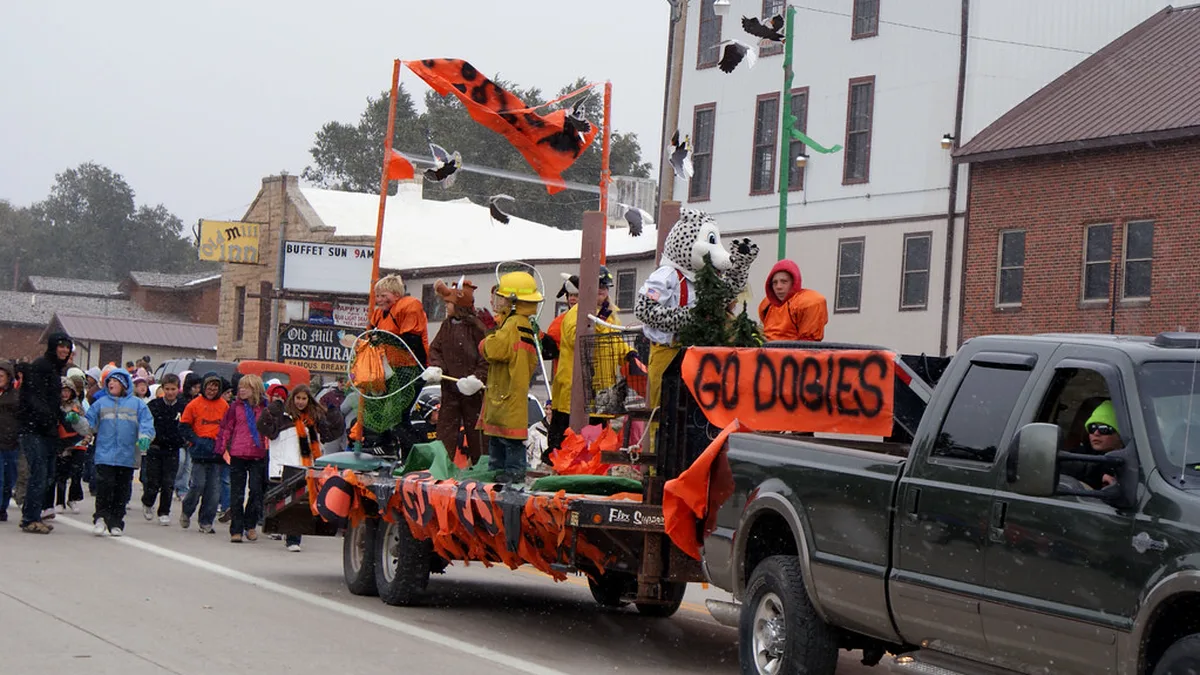
The candy rule exists for a reason. On Reddit’s teachers forum, one teacher described a homecoming parade that turns into crowded chaos as younger kids step into the road for candy and swag thrown from floats, even with teachers and police on the route. If treats are allowed at all, walkers on the sidewalk side solve most of that.
Trailer, tow vehicle, insurance and road closures are set by the school, the district and the city permit, not by the crew. Ask early, get the answers in writing, and print them on the sign-up sheet.
How do you keep a small crew on track?
A small crew stays on track when the design shrinks to match it, the work is split into tasks people can do in an hour, and one person owns each weekend. Volunteer turnout, not money, is the limit most class floats hit, so plan the design around the people who signed up.
The Westwood Horizon story is honest about this. The sophomore class told the paper that too few volunteers made the work harder, and that they wanted more help next year. The floats were put together in student council officers’ garages with paper, cardboard, paint, zip ties and tape.
Bigger crews have other problems. A day-by-day float diary in the Penn State student paper followed two student groups and 65 people over five days in 2012. On parade morning, one tissue paper skirt was destroyed while the float was moved to campus, and four members redid it in two to three hours. Transport is where floats break.
- Split the work: folding pomps, cutting letters and painting panels can happen at lunch or after school, away from the trailer.
- Post a sign-up sheet with one-hour slots, so nobody commits to a whole Saturday.
- Name one float chair per weekend who brings the supply list and locks up.
- Pack a repair kit: zip ties, duct tape, a stapler, spare tissue and spare skirt material.
- Keep photos to float and crowd shots, with no student names.
Cost follows the same logic. The Sengerson guide puts a class float at $150 to $400 split across the group, with about half reusable next year. The Digital Trophy Case guide gives $1,000 to $2,000 as a typical total for competitive floats with lights and costumes. A first-year council belongs at the low end; borrow the trailer, reuse last year’s skirt, and spend on tissue and wire.
Homecoming parade float ideas for colleges and clubs
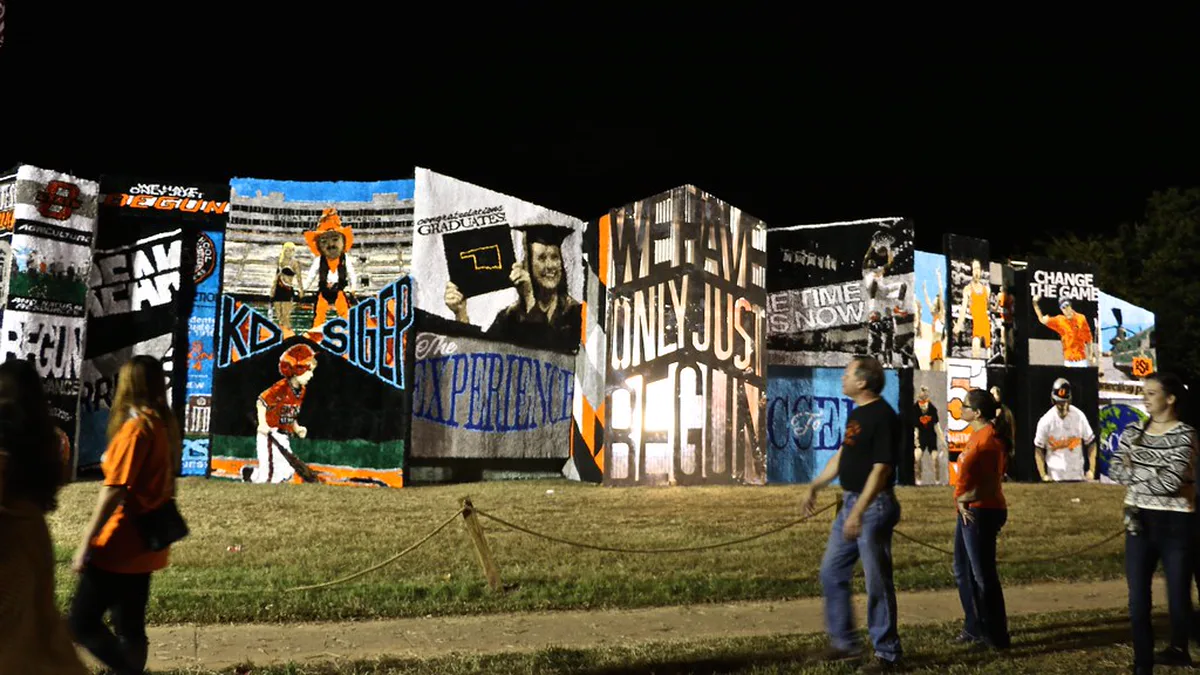
College and club floats follow the same rules but usually have a larger crew and a longer runway. The strongest homecoming parade float ideas for campus groups tie the group’s identity to the homecoming theme.
The scale can be large. The Baylor Lariat reported in 2025 that Baylor float chairs spend around 50 hours a week on site before a parade that dates to 1909. Few clubs need that. A club float works when the crowd can tell who you are from the float alone.
- Robotics or engineering club: a giant mascot with one moving part, such as a waving arm.
- Theater or choir: a stage set from the fall show, with the cast walking alongside.
- Language club: a world map with greetings in the club’s languages, kept to places and words rather than costumes of a group of people.
For the dress-up side of the same week, see the themes for each day of spirit week, and browse the full set of spirit week and homecoming guides.
The short verdict
The floats that win over a crowd are rarely the most complicated ones. A first crew does best with one centerpiece, large letters on both sides, a skirt that hides the wheels and a theme the sidewalk can read in two seconds. Get the rules in writing, size the design to the volunteers who signed up, and treat transport as the riskiest hour. Then write down what it cost and what broke; next year’s council will use that page more than the float.
Asked at the planning meeting
How much does a homecoming float cost?
Published estimates run from about $150 to $400 for a class float to $1,000 to $2,000 for a competitive one with lights and costumes. Borrowing the trailer and reusing last year’s skirt keeps a first float near the low end.
Who drives the truck that pulls the float?
The school and the parade organizer decide that, often an adult with a valid license and insurance. Some parades, such as FSU’s, ask for both on the day. Ask the advisor before choosing a tow vehicle.
Can students ride on a homecoming float?
It depends on the parade. Some allow riders who stay seated near the edges and set a maximum number of people per entry; others limit riders to the vehicle cab or a truck bed. The rulebook and the advisor decide.
What happens to the float after the parade?
Most crews strip it the same weekend. Keep the deck, skirt and reusable props in labeled bins, recycle the paper, and return the trailer clean. Reused materials cut next year’s cost.
How do you make a float stand out to judges?
Judges often score creativity, originality, spirit, use of theme and overall appearance, as the University of Alabama parade does. One clear built object and a tight link to the homecoming theme score better than many small details.
How we researched this: Drafting help came from AI; the timelines, budgets and safety notes were checked by the editor against the parade rulebooks and student newspaper accounts linked below before this went live.
Sources: UA homecoming parade rules (2025); Mankato homecoming parade guidelines; FSU homecoming parade; NWOSU Float Building 101; Westwood Horizon (2024); 2012 student newspaper float diary; The Baylor Lariat (2025); Wikipedia: Pomping; Sengerson float guide; Digital Trophy Case float guide; Reddit r/Teachers discussion.